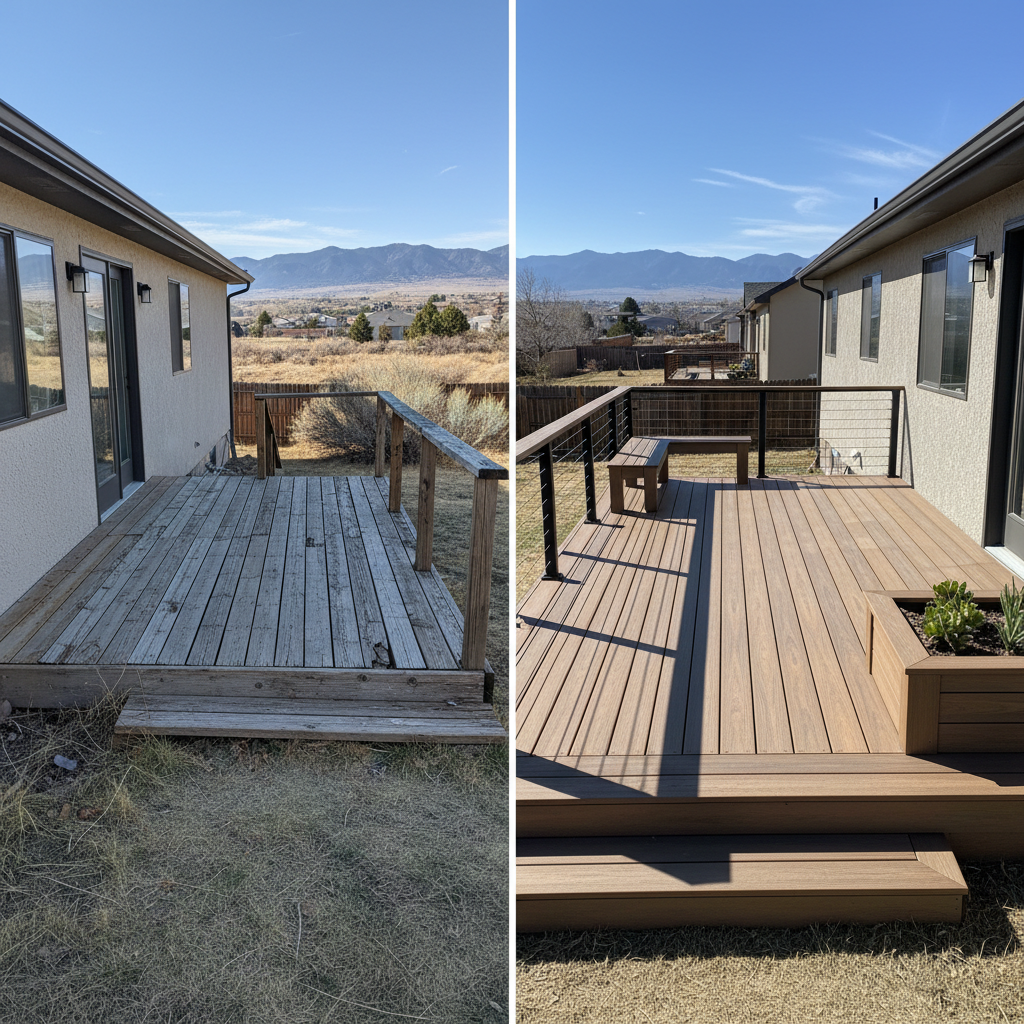
Alright, let's talk composite decks. You've probably heard they're a great alternative to wood, and you'd be right. Less splinters, less staining, less work overall. But it's not as simple as just picking 'composite.' There are two main types you'll run into: capped and uncapped. And for folks living here in Pueblo, knowing the difference is going to save you a lot of headaches and money down the road.
Uncapped Composite Decks: The Original
When composite decking first hit the market, it was mostly uncapped. Think of it as a solid blend of wood fibers and recycled plastic, all the way through. It was a big step up from wood, no doubt. You didn't have to worry about rot or termites, and it wouldn't splinter like a traditional wood deck.
Cost: Generally, uncapped composites are a bit cheaper upfront. That's one of their main selling points if you're on a tighter budget.
Durability: They're tough, don't get me wrong. They resist rot and insects like champions. But because the wood fibers are exposed to the elements, they can still absorb some moisture. This means they're more prone to staining, especially from things like spilled BBQ sauce or even just dirt settling in. They can also fade over time, and you might see some mildew or mold if they're in a shady, damp spot – which, let's be honest, isn't usually a huge issue with Pueblo's dry climate, but it can happen near sprinklers or under trees.
Maintenance: While you don't stain or seal them, you'll still need to clean them regularly. Pressure washing is often recommended, but you have to be careful not to damage the surface. Stains can be tough to get out once they've set in.
Appearance: They often have a more matte, slightly less refined look than their capped counterparts. Colors can be a bit more muted, and as I mentioned, they can fade.
Capped Composite Decks: The Evolution
Now, capped composites are the newer generation, and they've really taken over the market. These decks have a core similar to uncapped composites, but they've got a durable, protective polymer shell that completely encases three or four sides of the board. It's like a tough, invisible shield.
Cost: You'll usually pay a bit more for capped composite decking. It's a higher-tech product, so that makes sense.
Durability: This is where capped decks really shine, especially for our Colorado weather. That polymer cap makes them incredibly resistant to moisture, fading, scratching, and staining. You spill red wine on it? Wipe it up. Your dog tracks mud? Hose it off. The cap prevents those wood fibers from being exposed, so they don't absorb anything. This is huge for us here in Pueblo, where we get intense sun exposure and sometimes those unexpected hailstorms. The cap helps protect against UV damage and impact.
Maintenance: This is the big win. They're super easy to clean. A little soap and water, maybe a soft brush, and you're usually good to go. No deep scrubbing for stains, no worrying about mold or mildew embedding itself.
Appearance: Capped composites come in a much wider range of colors and textures. Many of them are designed to mimic the look of real wood, with realistic grain patterns and multi-tonal streaking. They hold their color much better over time, so your deck will look newer, longer.
My Recommendation for Pueblo Homeowners
Look, I've installed a lot of decks around here, from the Mesa to Belmont. And based on what I've seen stand up best to our intense sun, dry air, and occasional wild weather, my clear recommendation for homeowners in Pueblo is a capped composite deck.
Yes, it's a bigger investment upfront. I get that. But think about it this way: you're building something that's going to be exposed to the elements day in and day out for decades. Our Colorado sun is no joke, and it can really beat up materials. That protective cap on a composite board is going to fight off UV rays, resist stains from your summer cookouts, and keep your deck looking good with minimal effort.
You'll spend less time cleaning, less time worrying about fading, and more time actually enjoying your outdoor space. When you factor in the long-term savings on maintenance and the extended lifespan of the deck looking great, that initial extra cost for a capped composite deck pays for itself. It's a smarter, more durable choice for our specific climate and for anyone who wants a beautiful, low-maintenance deck.
If you're thinking about a new deck and want to see some samples or get a quote for a capped composite that'll really last, give Skyline Decks Pueblo a call. We'd be happy to walk you through the options.